
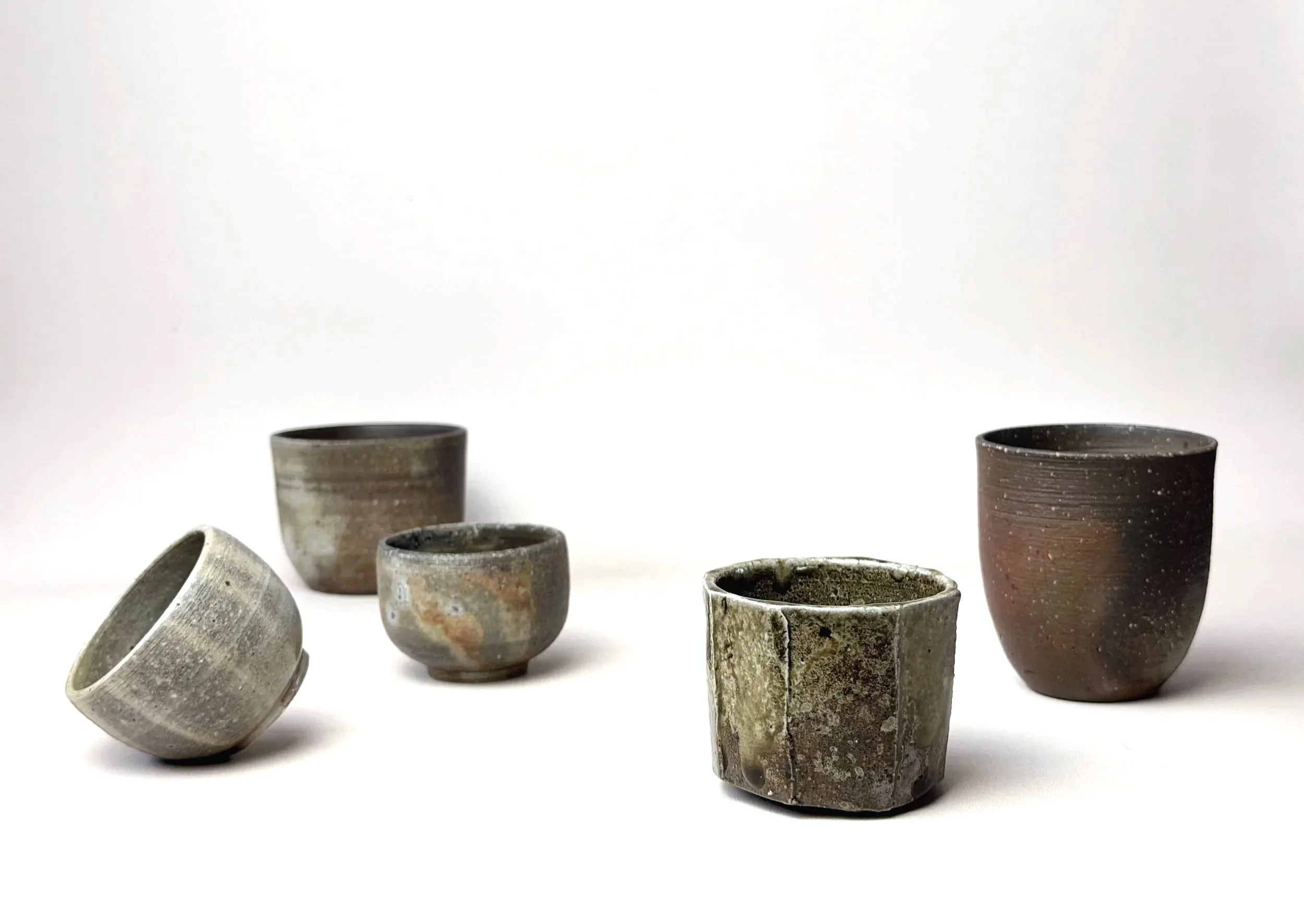
Bizen ware (Bizen-yaki) is one of Japan’s oldest pottery traditions, known for its unglazed surfaces and the natural markings created during wood firing. Rather than relying on glazes, each piece develops its character through the interaction of flame, ash, clay, and its position inside the kiln. No two pieces are ever exactly alike.
The iron-rich Bizen clay becomes exceptionally strong and durable during the long wood firing, making the pieces perfectly suited for everyday use even without a glaze. In Japan, Bizen ware has also long been appreciated for the way it is said to enhance the flavour of water, tea, and sake.
During my time in Bizen, I had the opportunity to learn from master potters, experience daily life at the Pottery Center, and take part in a traditional noborigama firing. The photographs below offer a glimpse into that experience and the place that continues to inspire my work today.
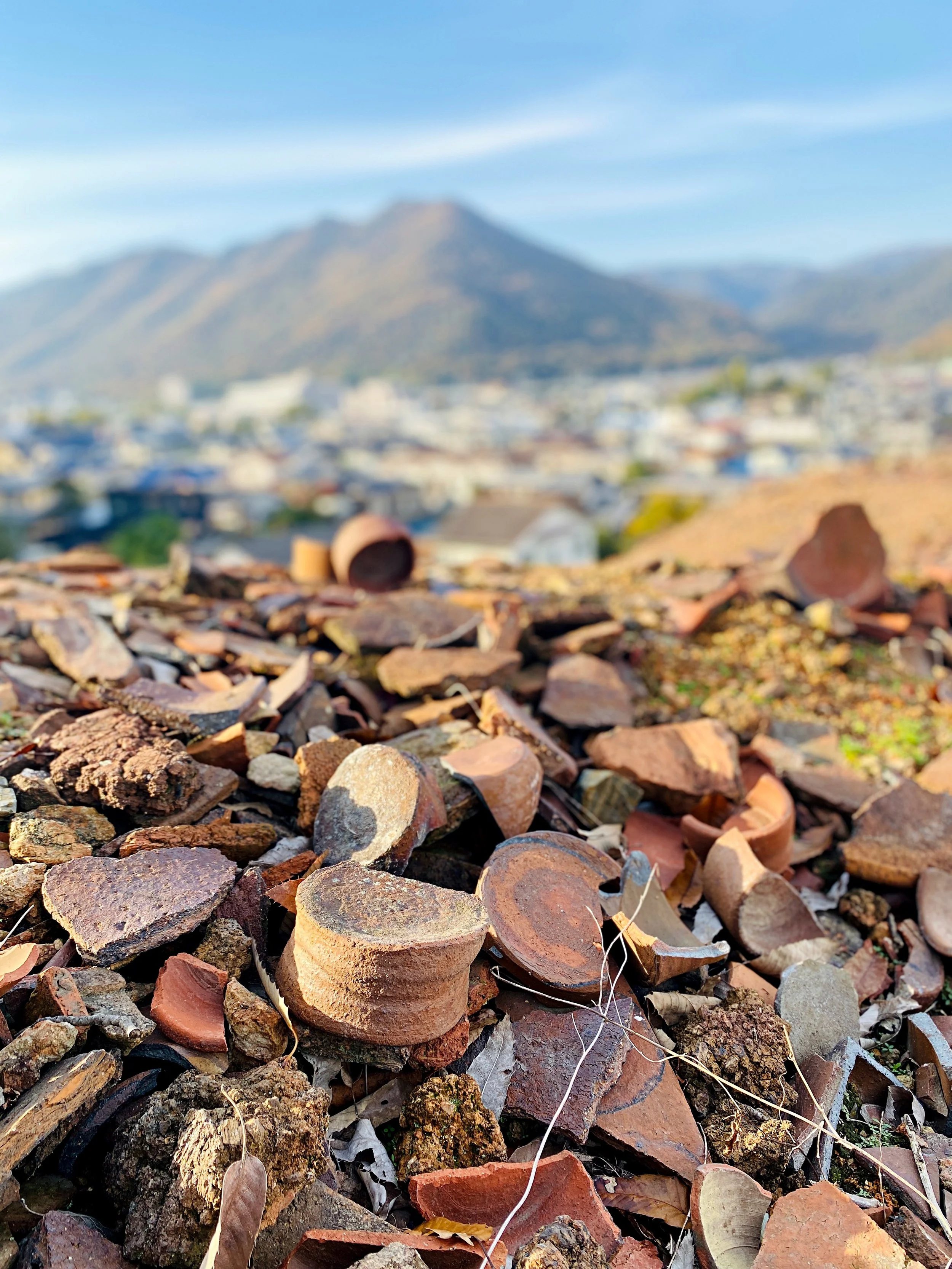
Old kiln site in Inbe, Bizen, where broken pottery pieces are scattered across the hillside above the town.
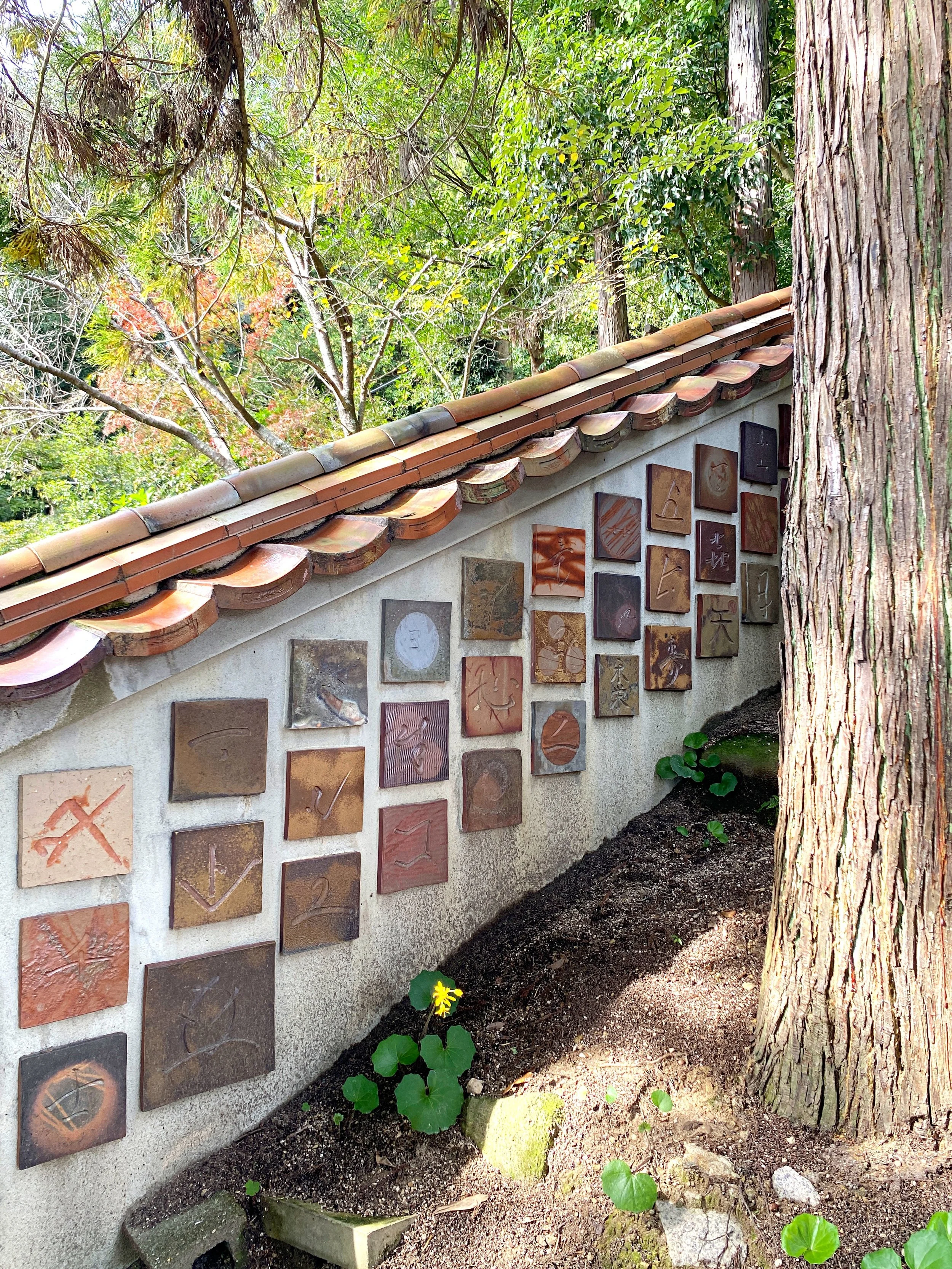
A wall beside the steps leading up to Amatsu Shrine in Inbe, decorated with tiles made of Bizen clay.
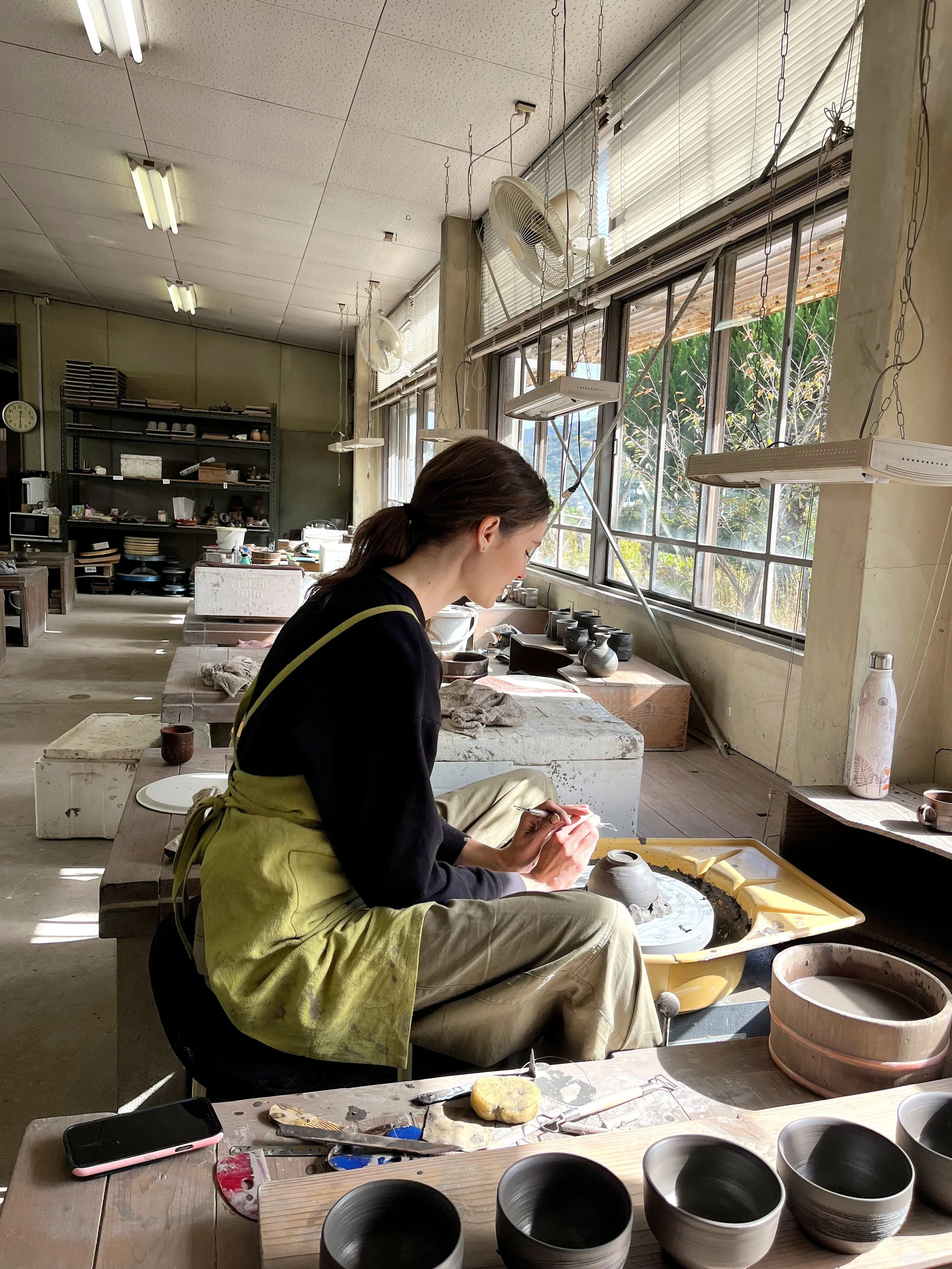
Working on the pottery wheel during my one-month course at Bizen Pottery Center.
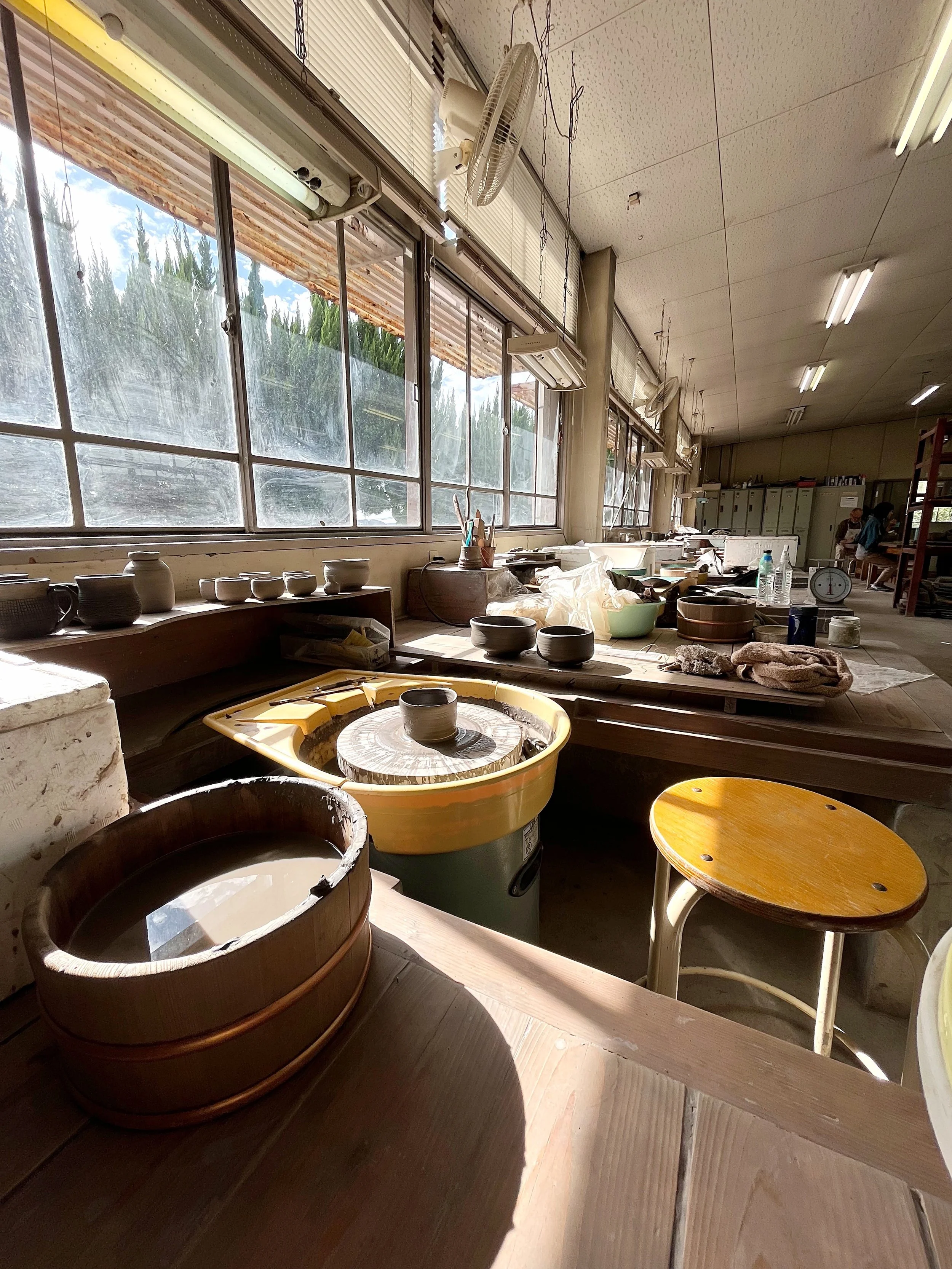
The interior of Bizen Pottery Center.
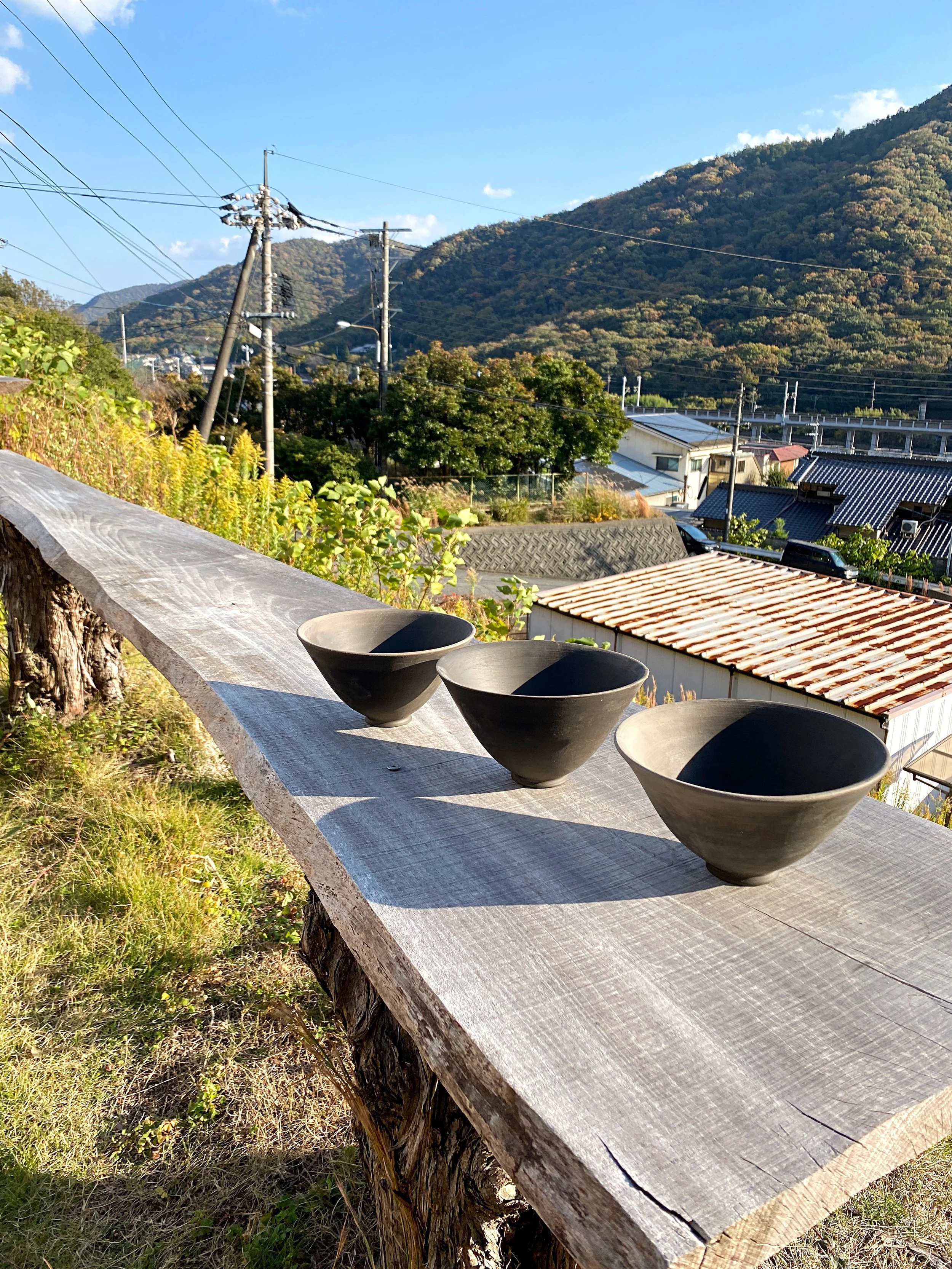
Freshly trimmed ramen bowls drying on a bench at Bizen Pottery Center, overlooking Inbe and the Shinkansen tracks.
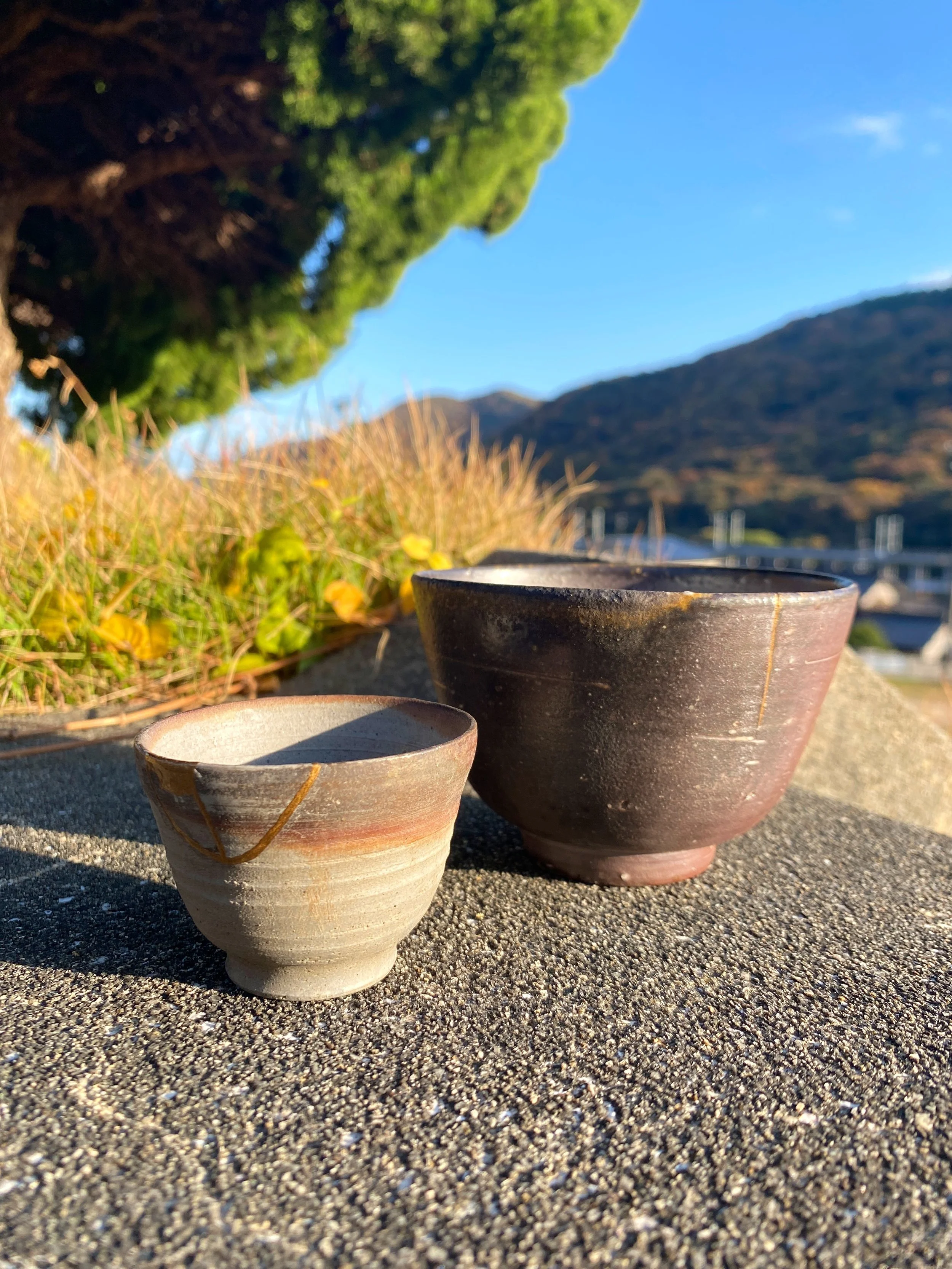
Two pieces repaired with kintsugi after a demonstration by our sensei at Bizen Pottery Center.
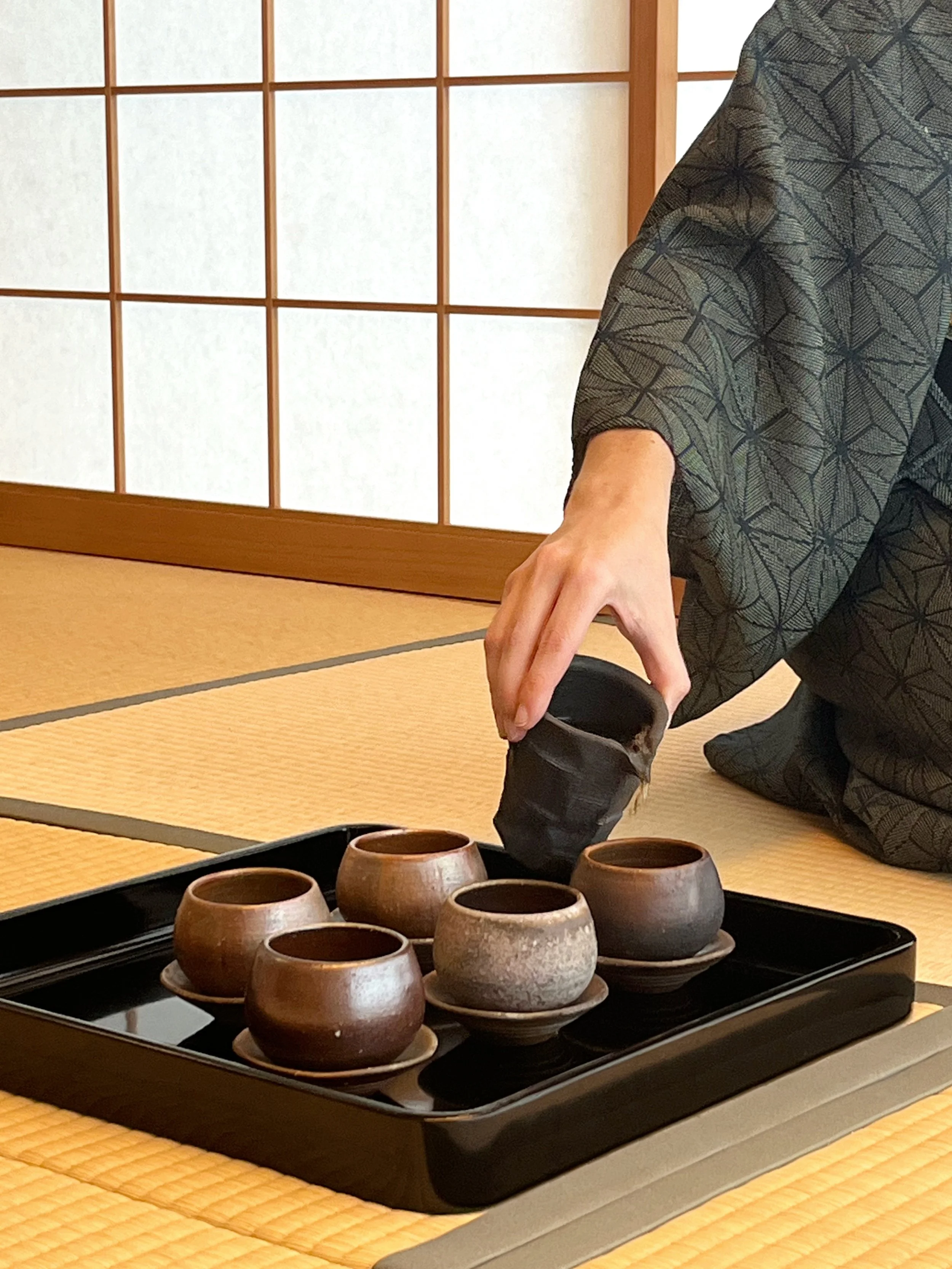
A tea ceremony setup on a tatami floor with cups made by Toshiaki Mori.
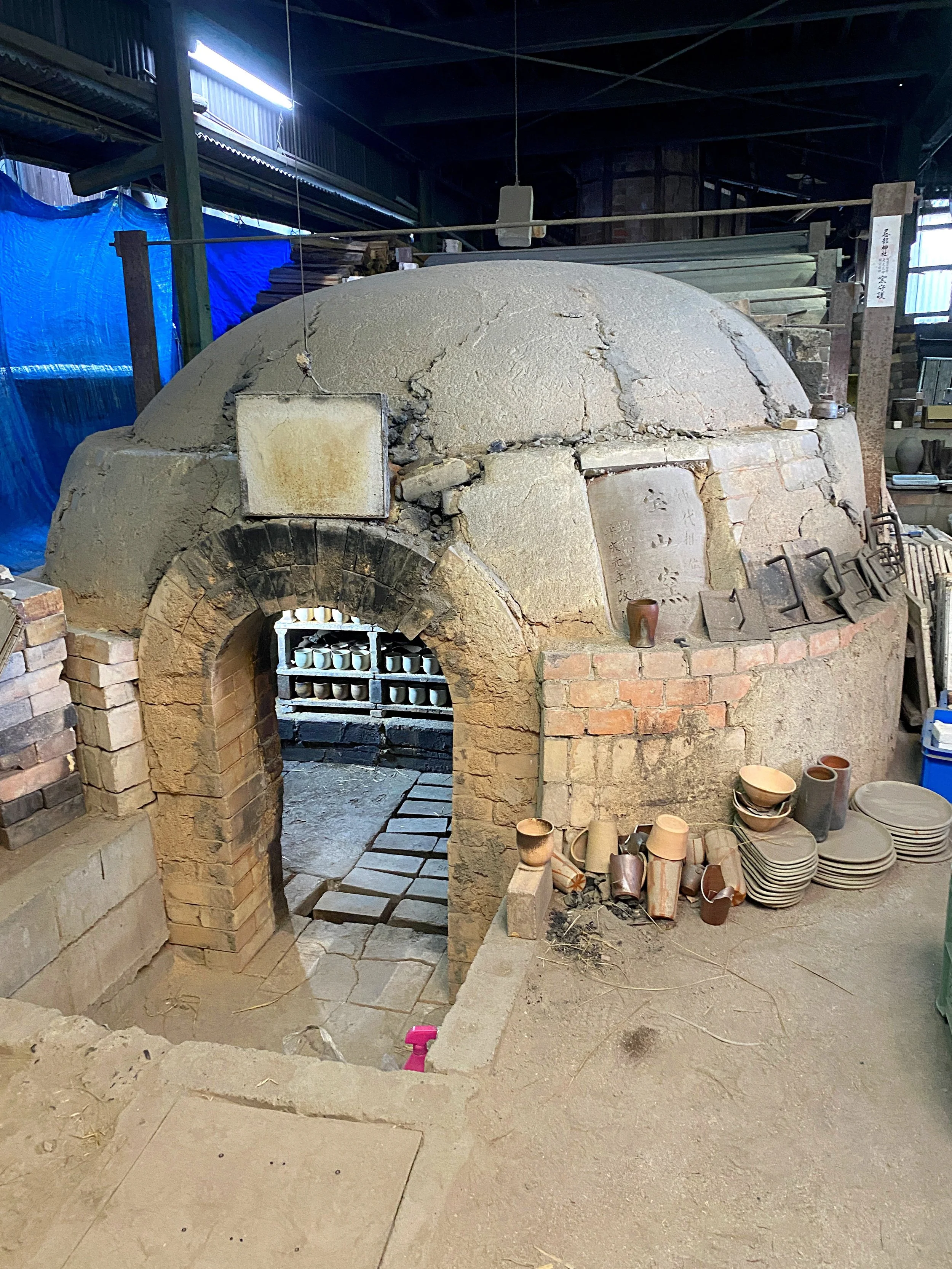
The noborigama kiln of Toshiaki Mori during preparation for firing.
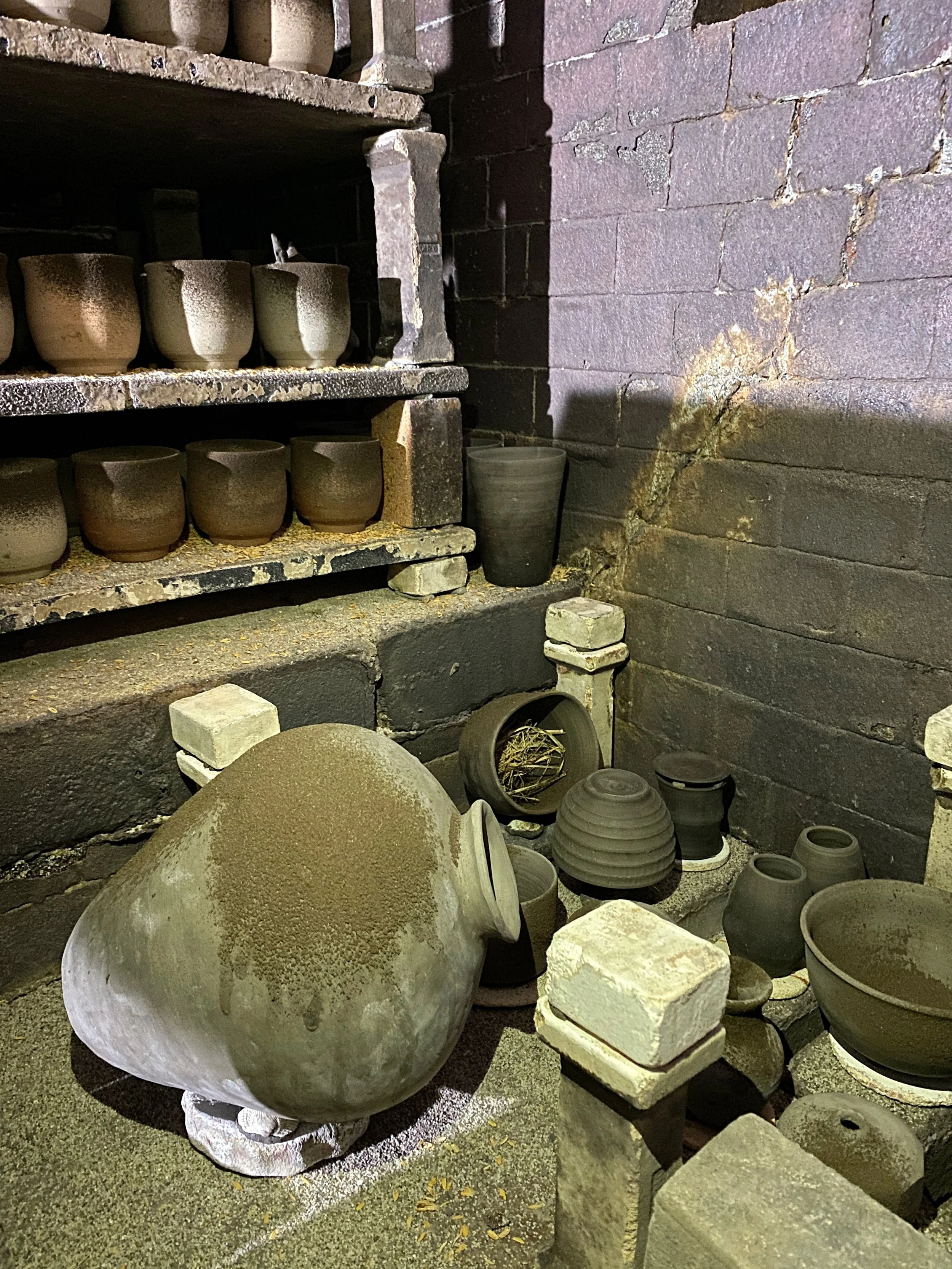
Inside the first chamber of the noborigama kiln, loaded with pieces for firing.
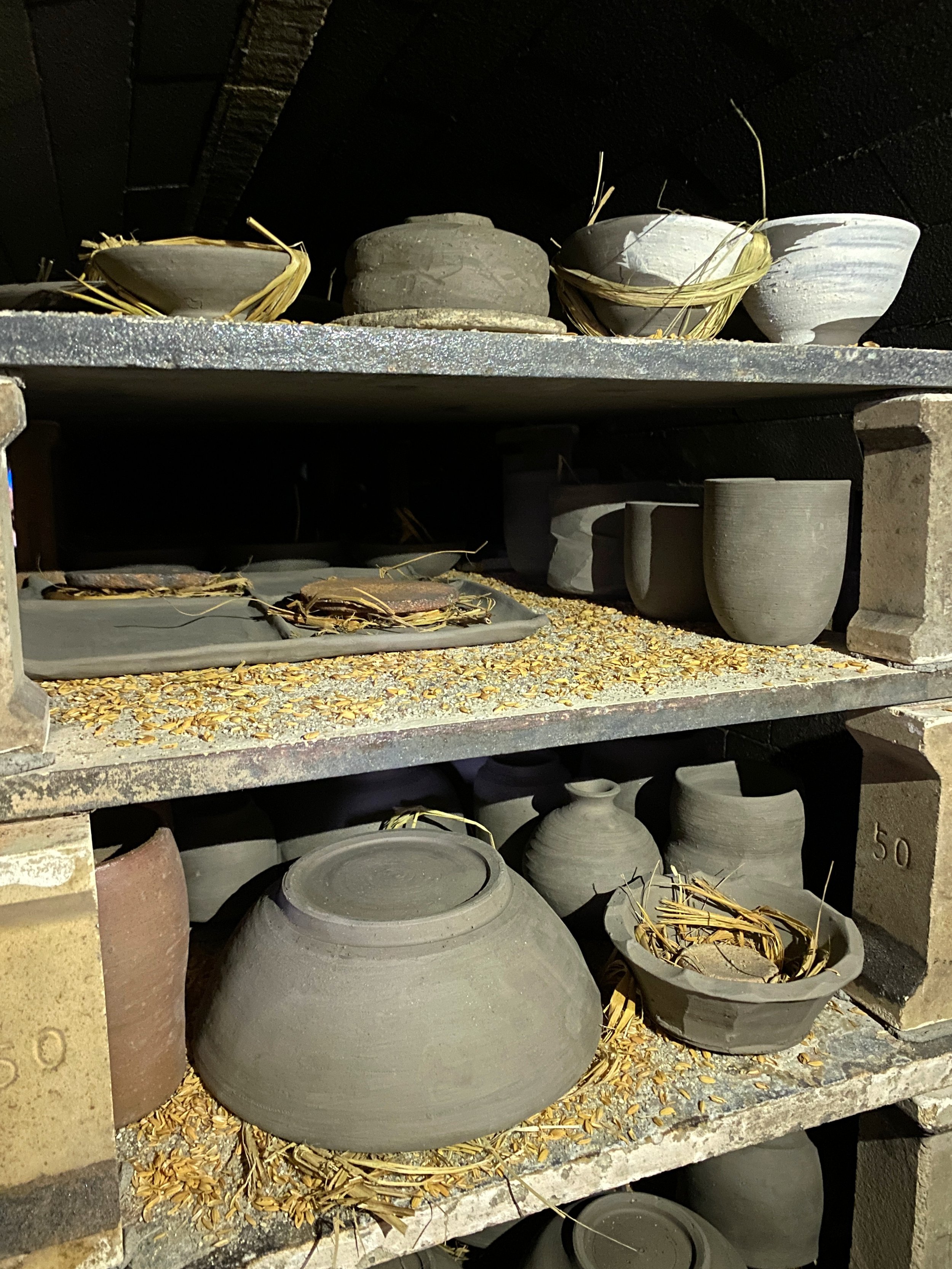
Inside the second chamber of the noborigama kiln, loaded with pieces for firing.
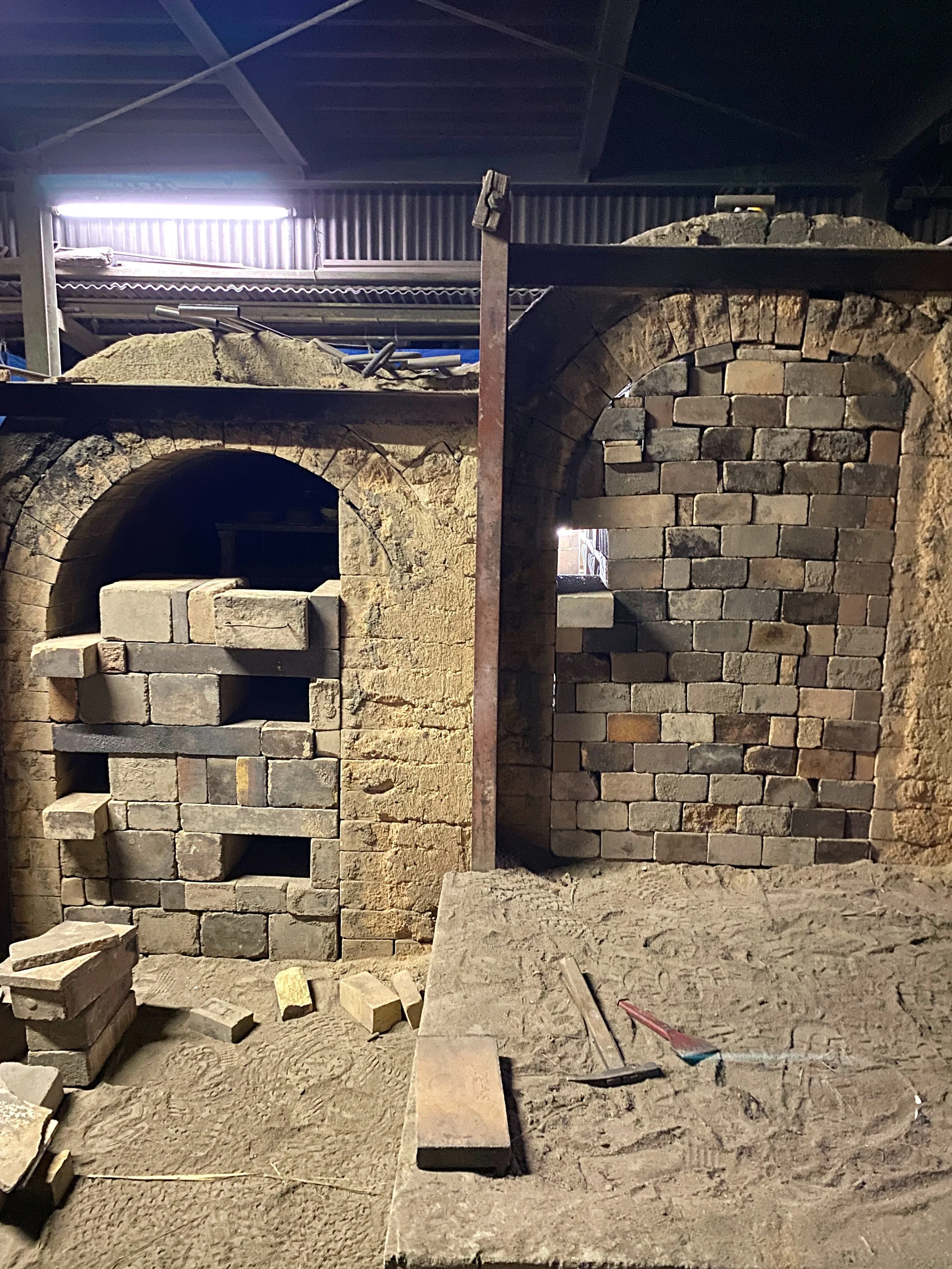
Sealing the noborigama kiln in preparation for firing.
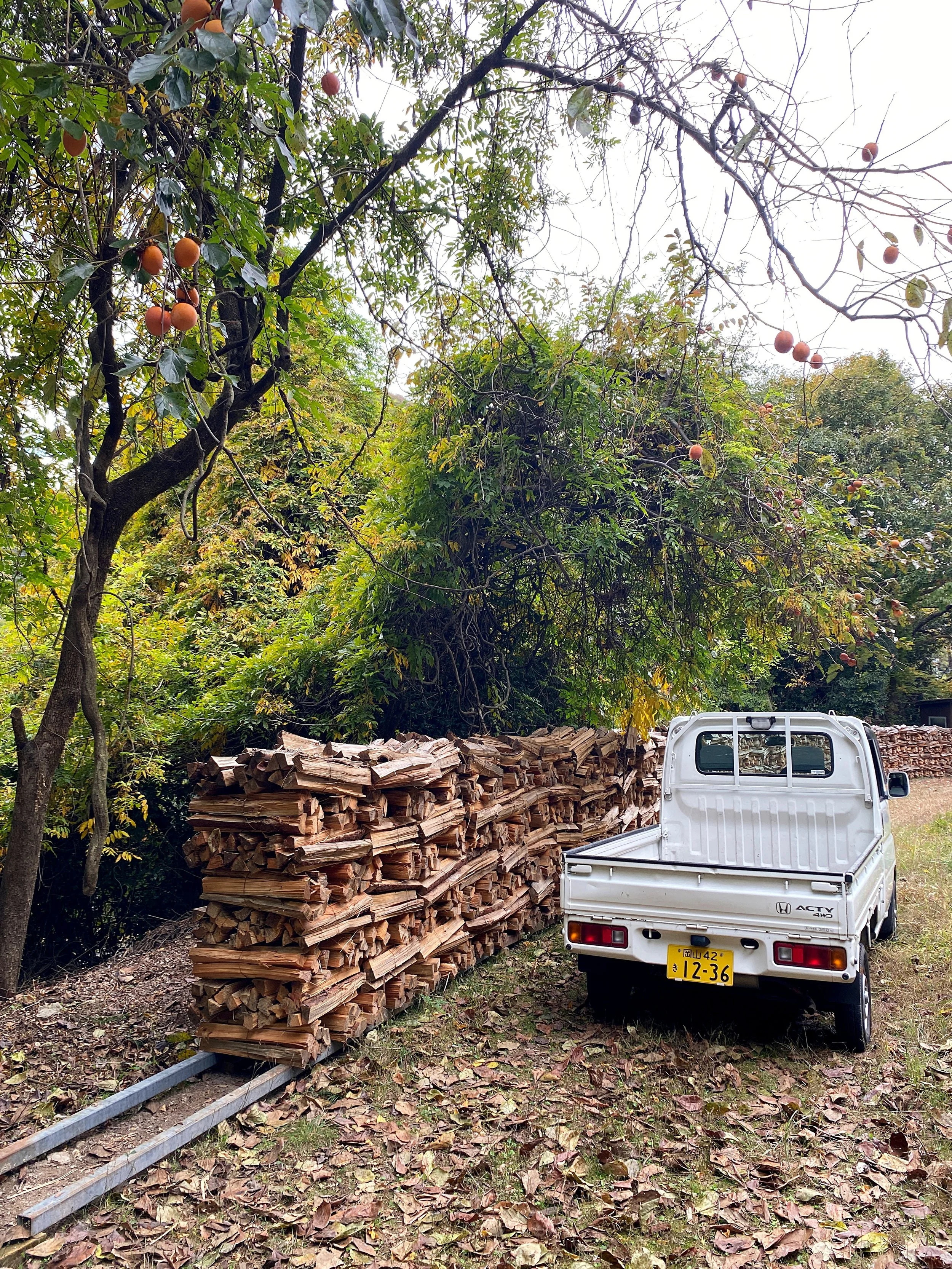
Collection site for firing wood.
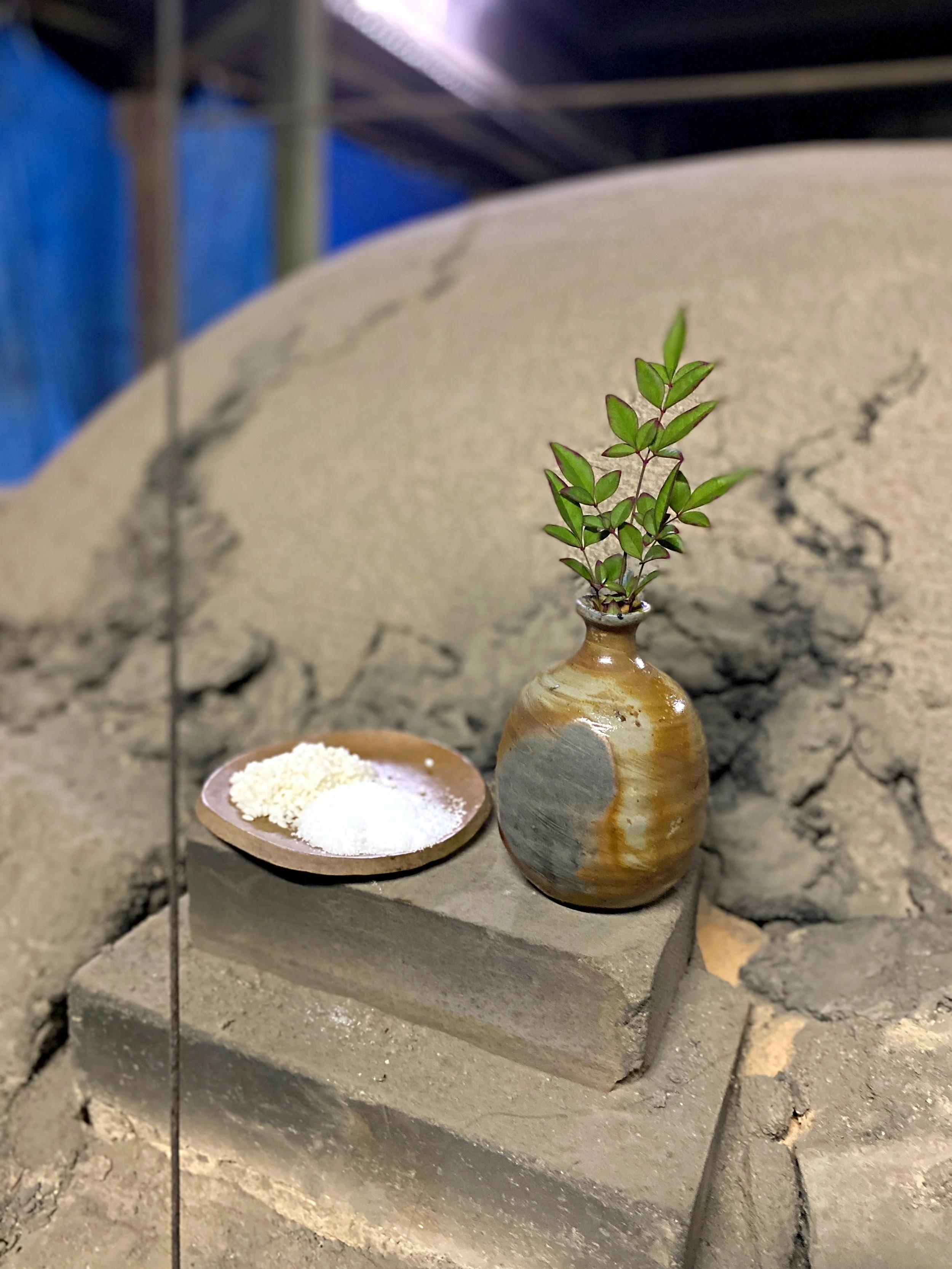
Offerings to the kiln gods placed above the main opening of the first chamber: a sake bottle, salt, and rice.
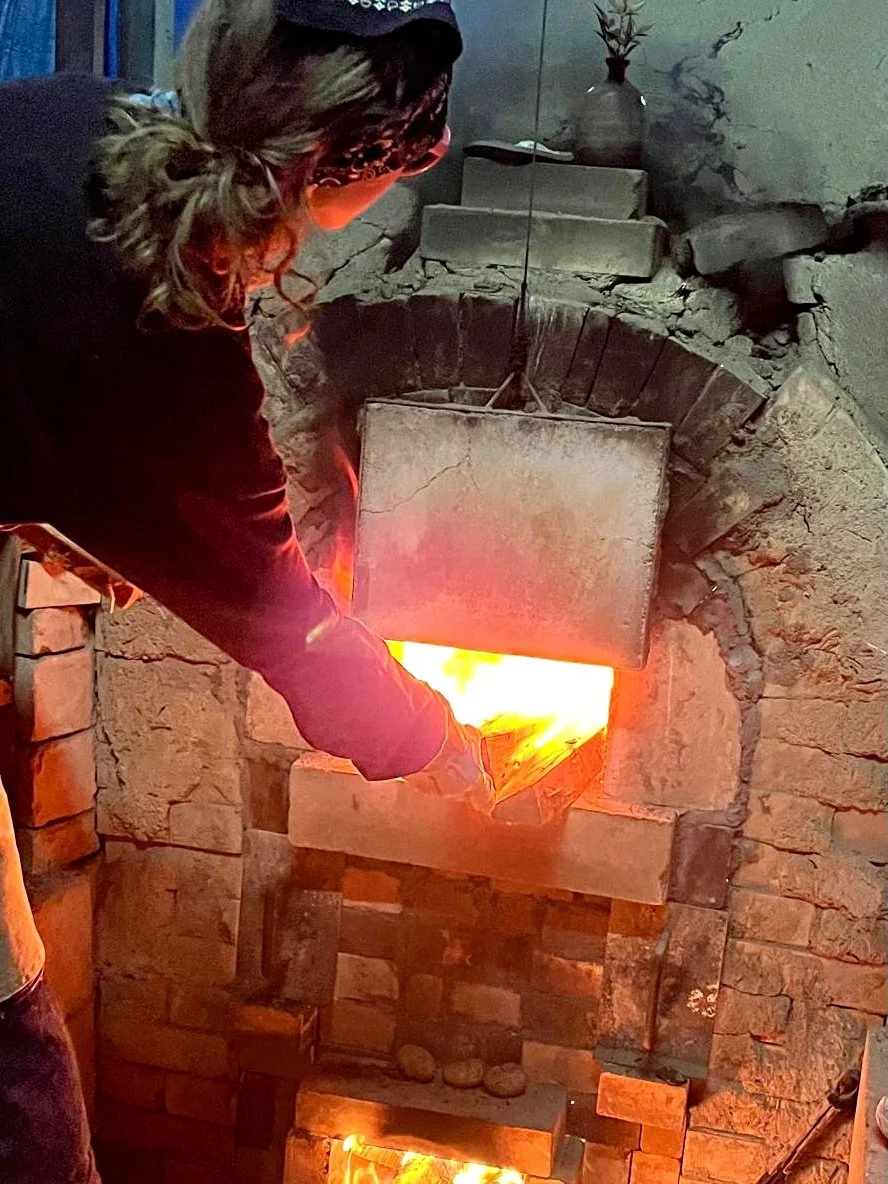
Feeding firewood into the first chamber of the noborigama kiln.
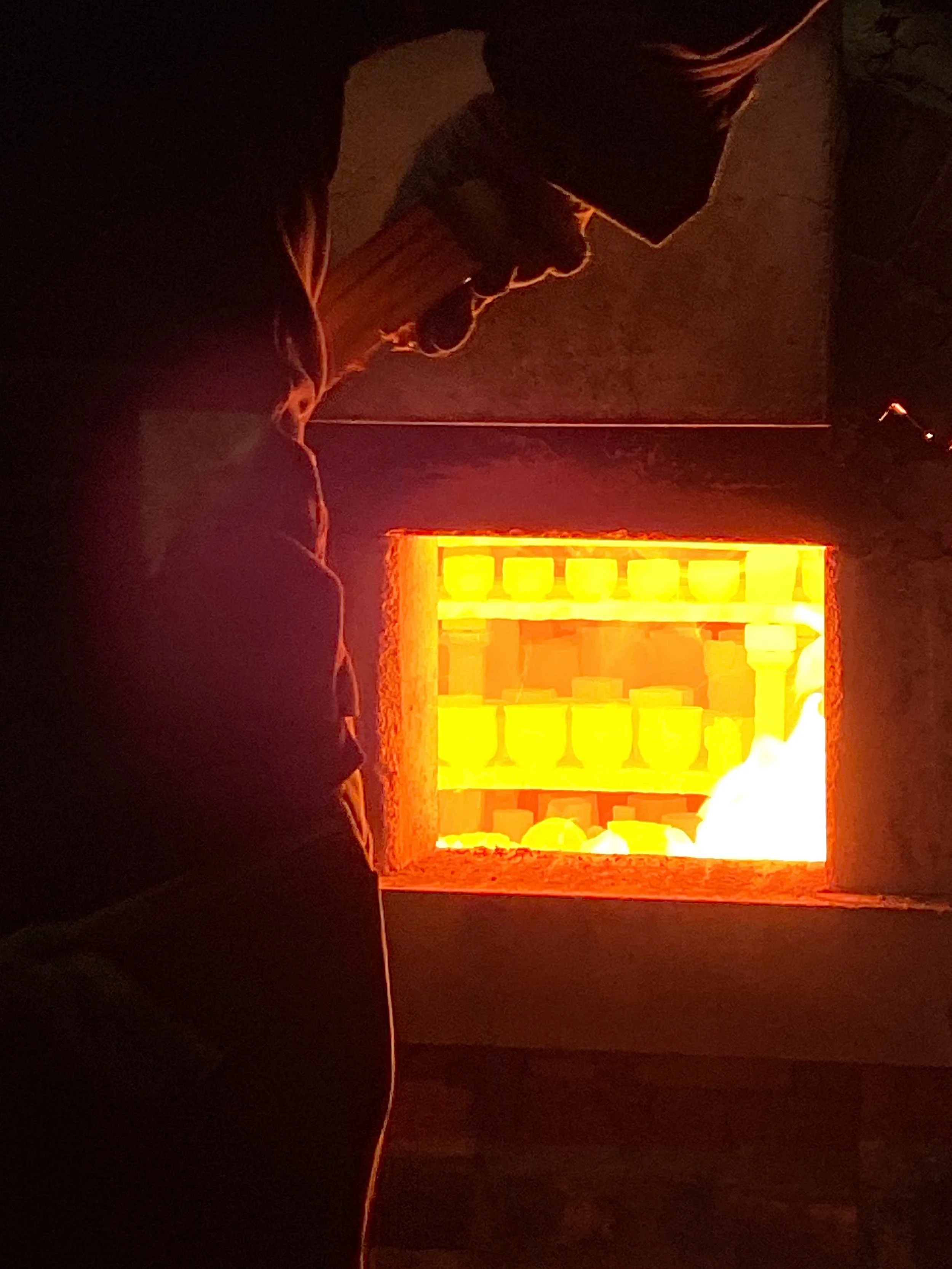
Detail of the first chamber window showing glowing pieces inside.
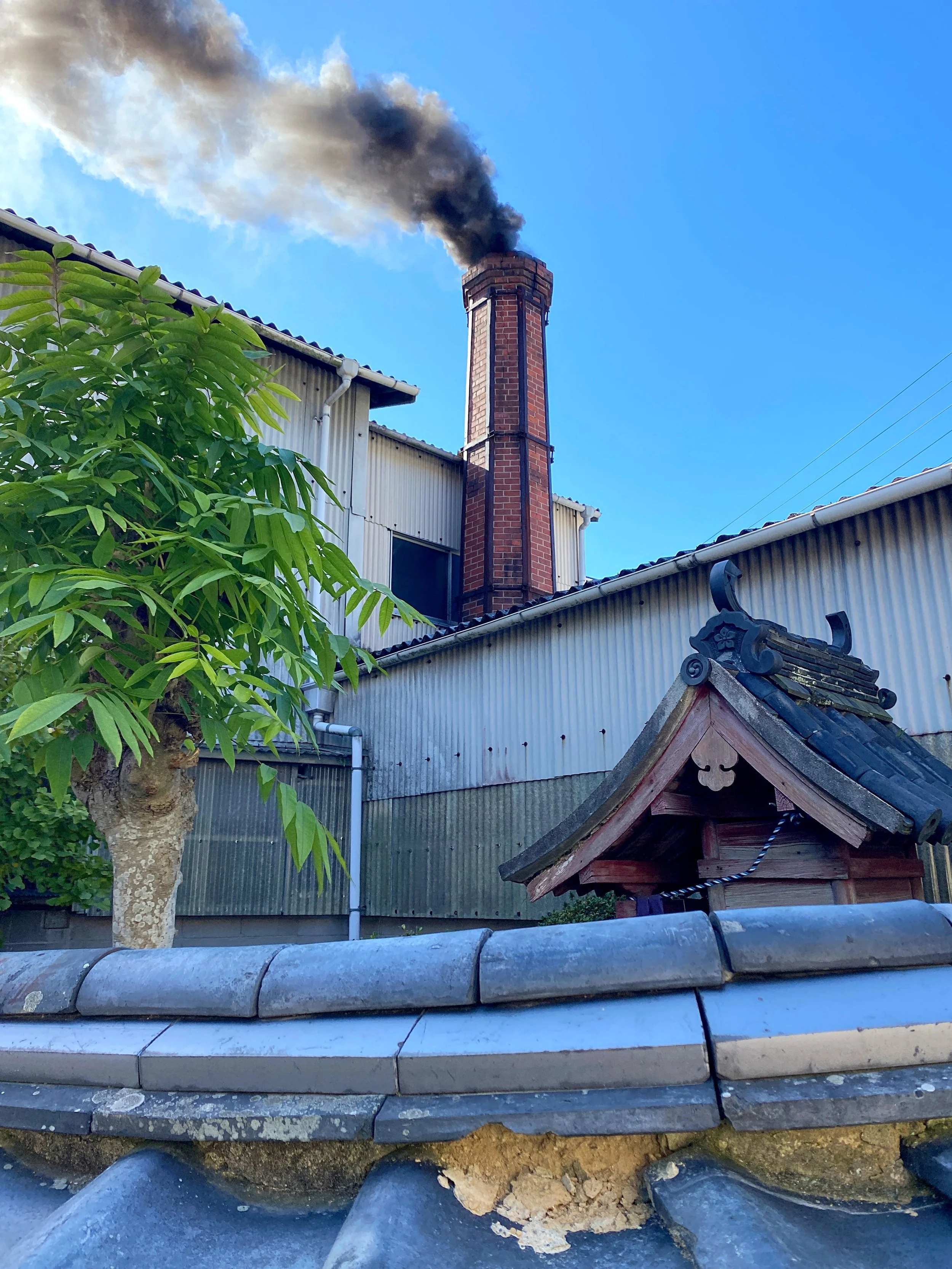
Smoking chimney of the noborigama kiln seen from the street.
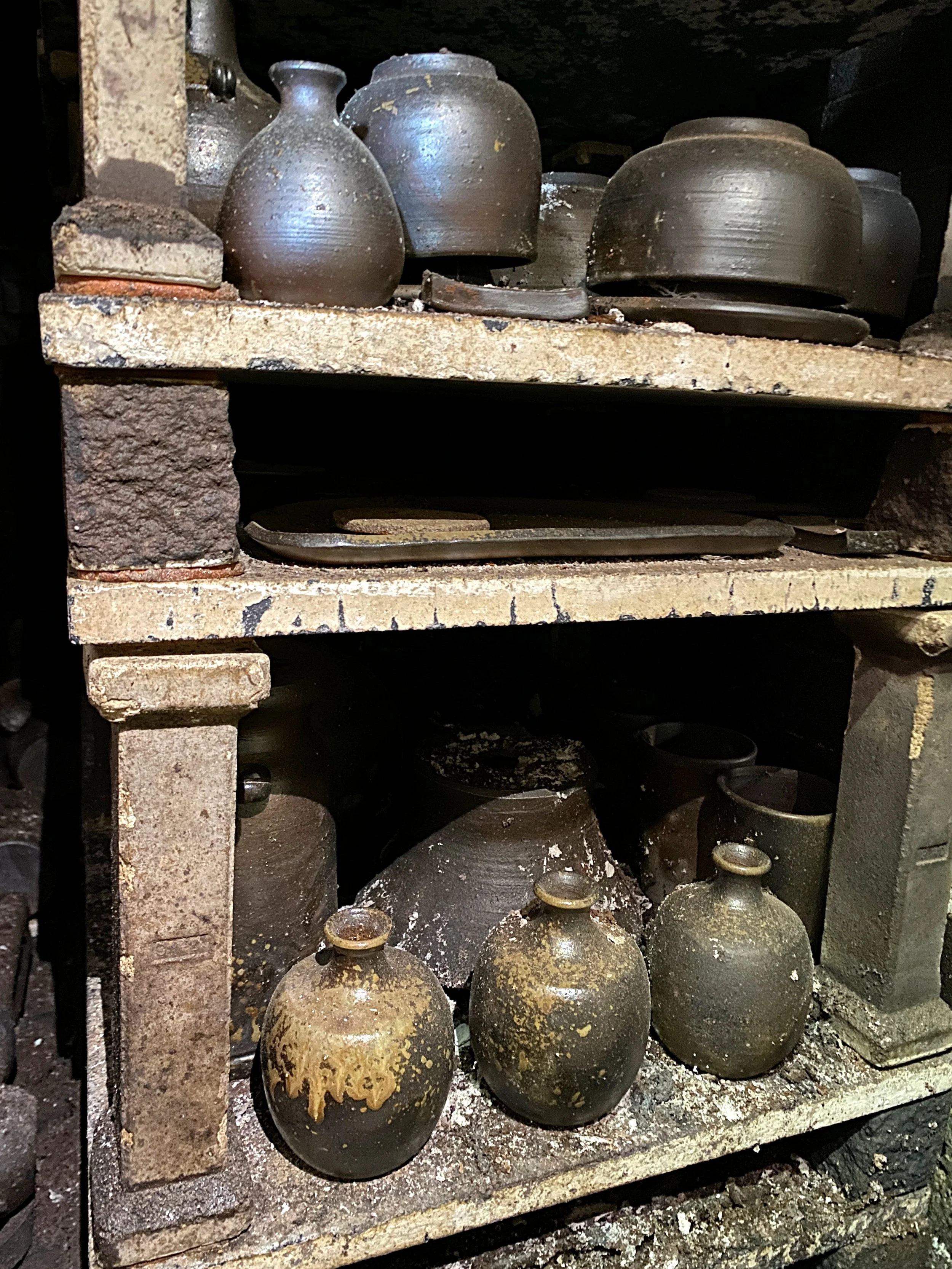
Post-firing kiln shelves showing ash-covered pieces and natural ash glaze.
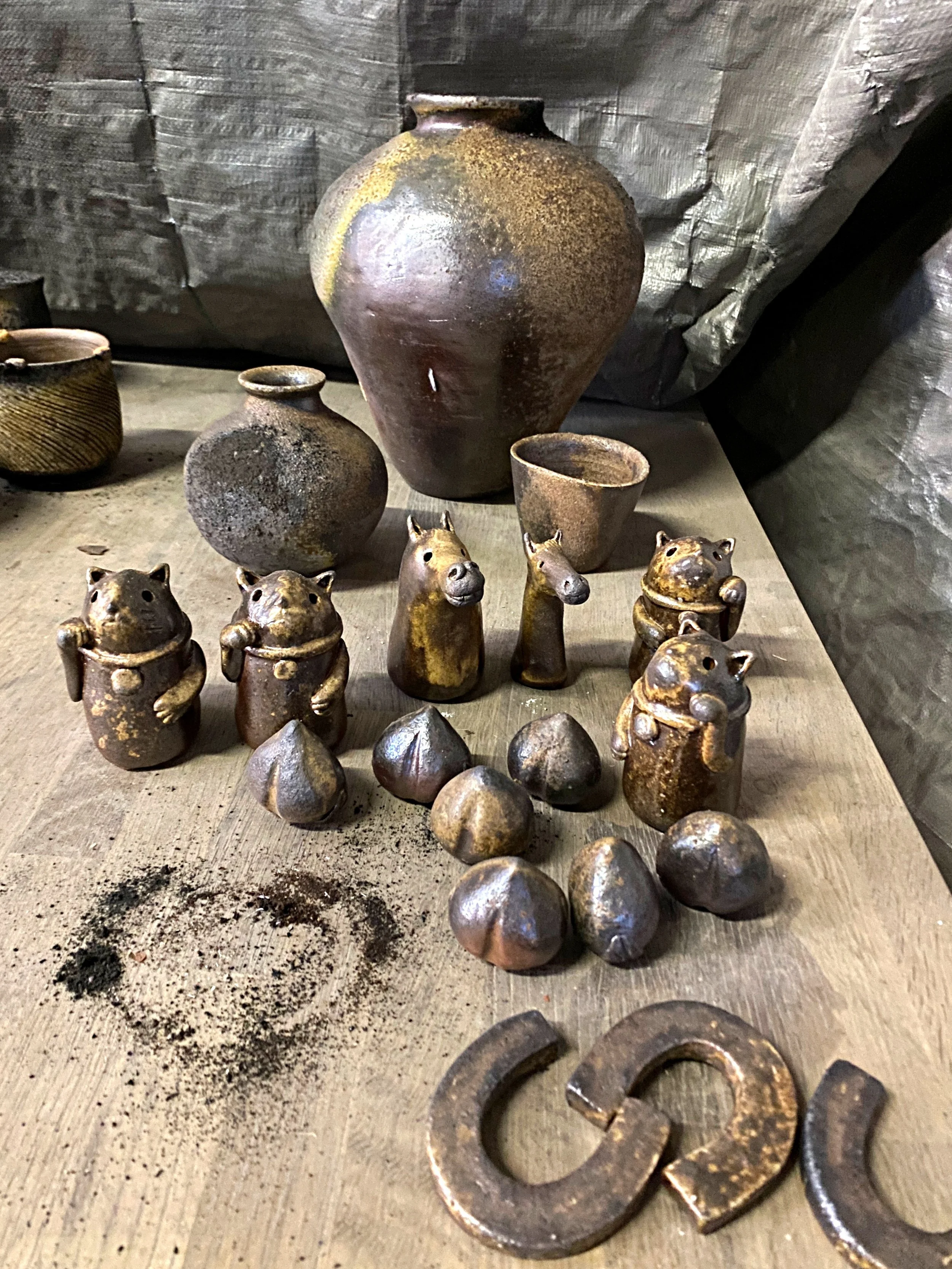
Pieces after unloading from the kiln, including my works in the background and small charms by Fumiyo Inai.
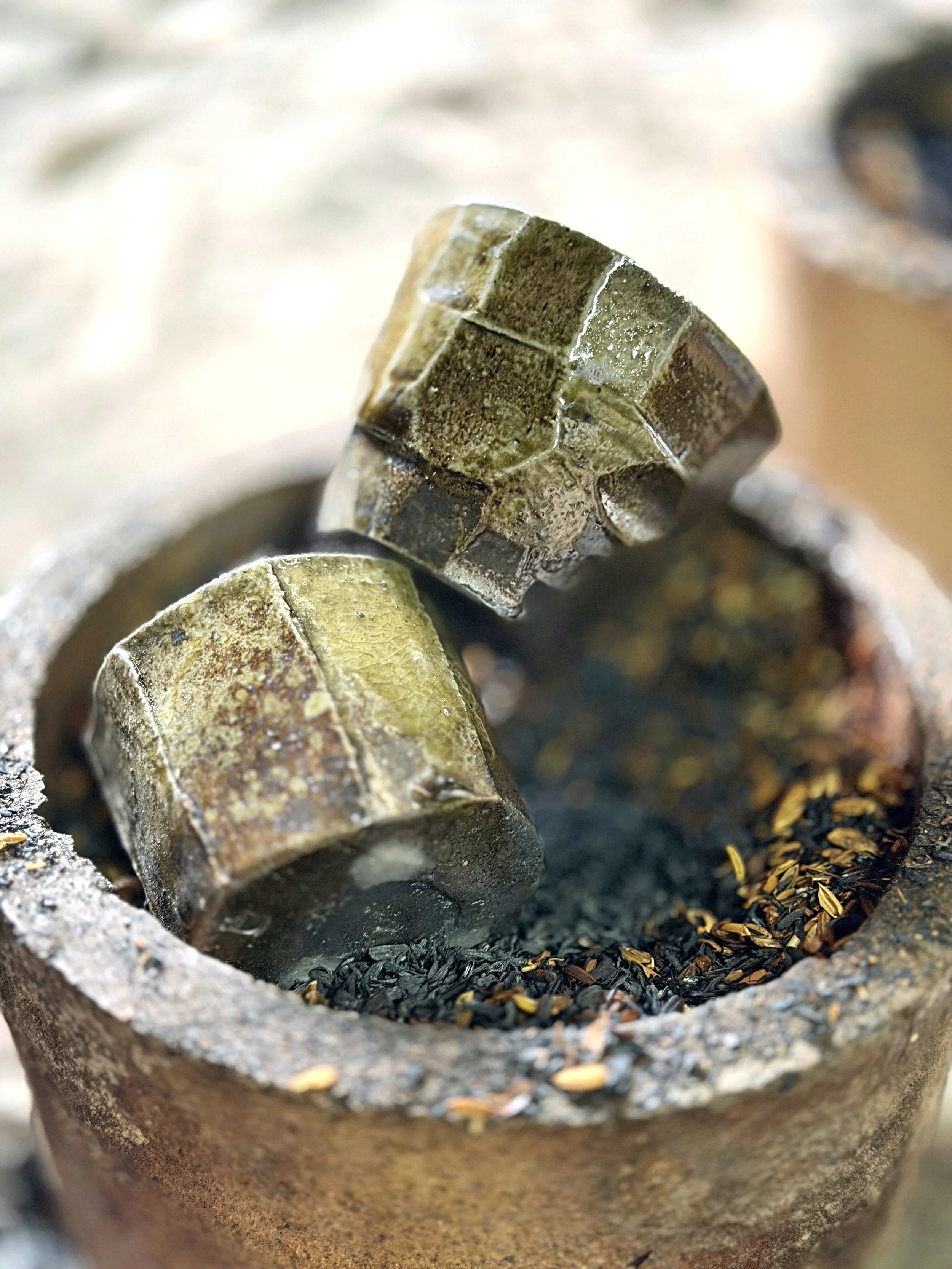
My two hikidashi pieces after being pulled from the kiln and placed in a sagar with rice husks, creating a strong reduction atmosphere and unique surface effects.
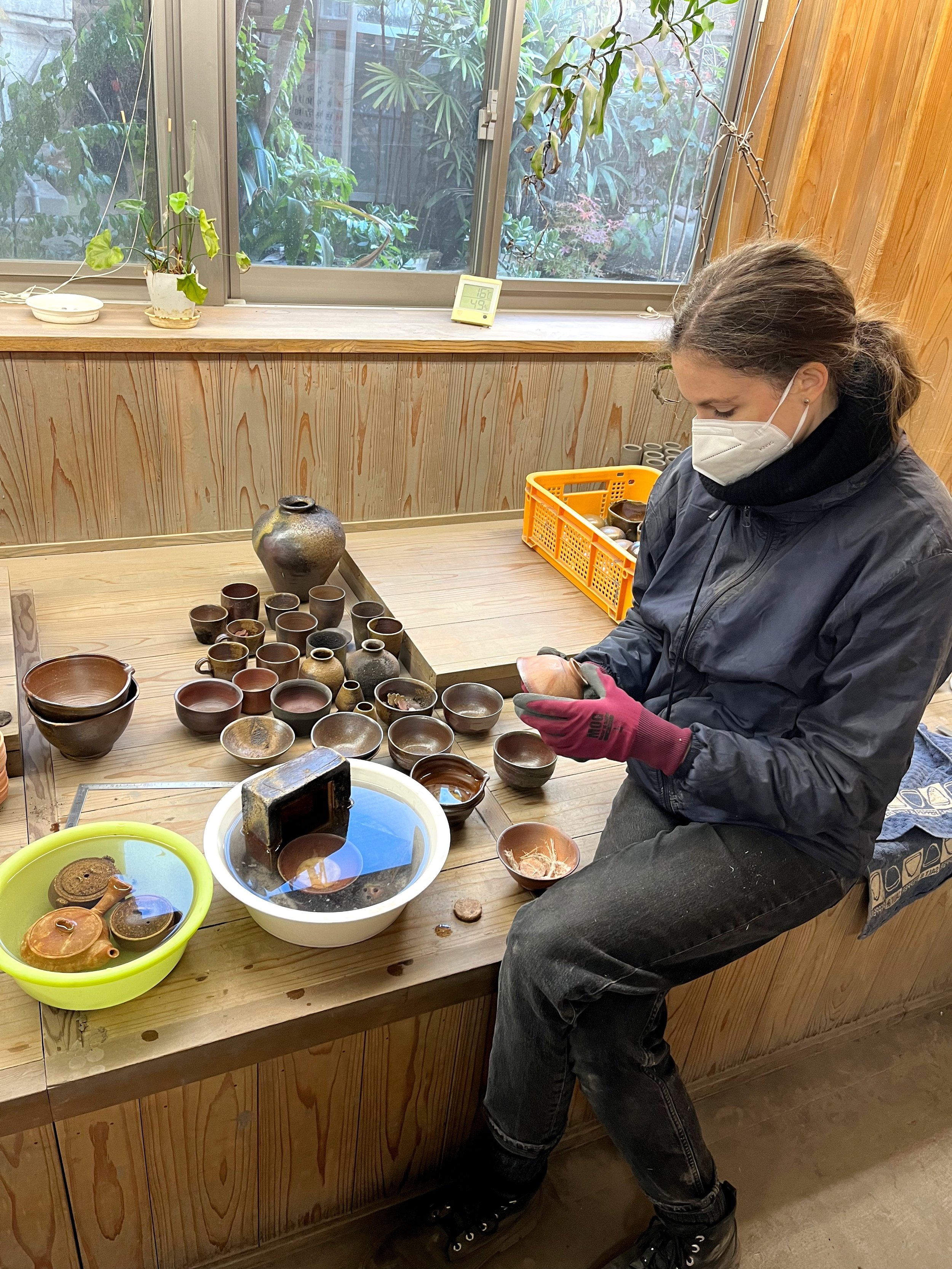
Back in the studio after unloading the kiln, with my pieces ready for sanding and packing for their journey back to Germany.